Student Assembly Speaker for Middle and High Schools
Dr. Sameer Hinduja speaks directly to students about AI, chatbots, deepfakes, and online life, in a session built on anonymous live polling and real research rather than on scare tactics.
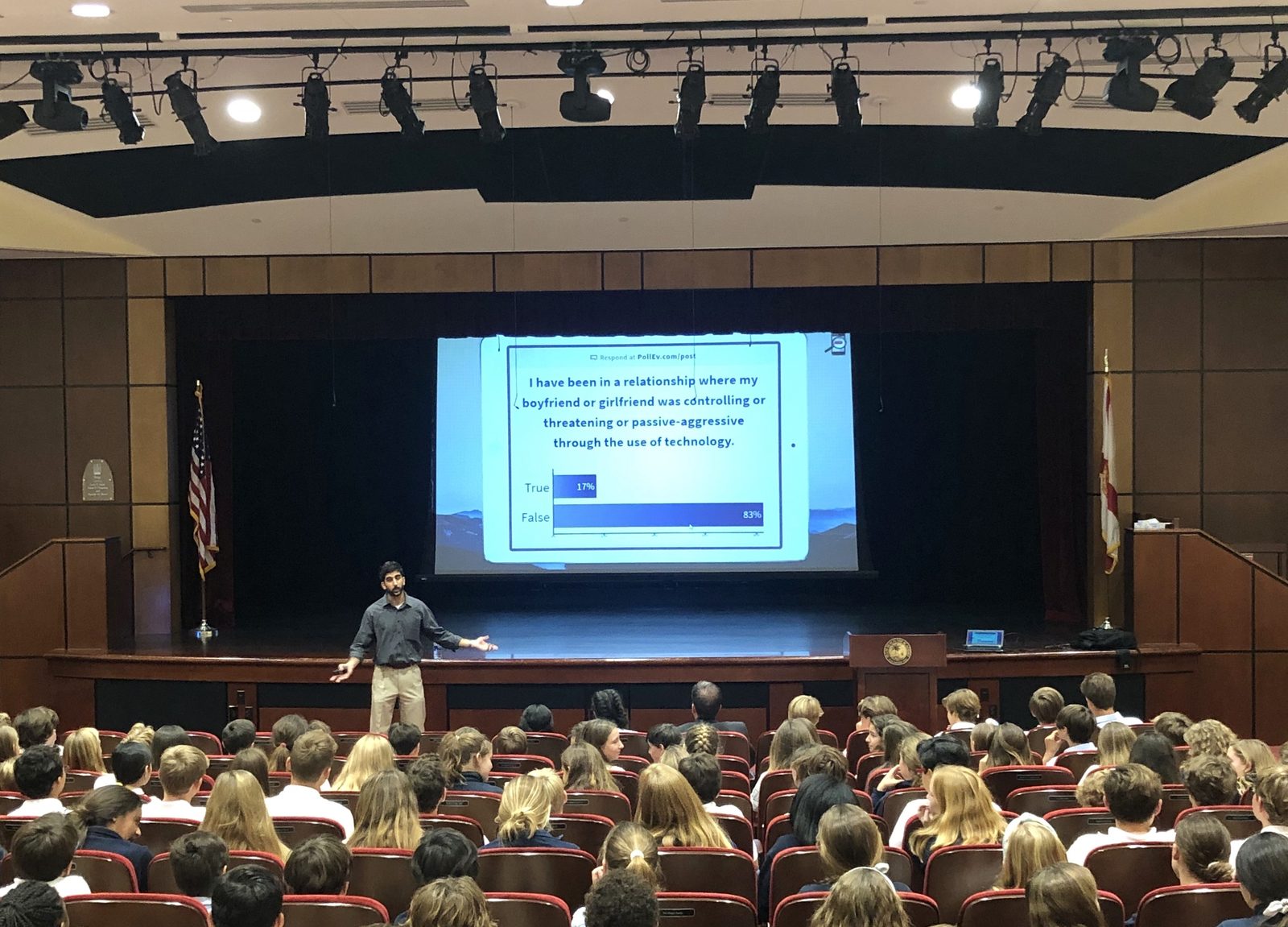
The Research Behind the Assembly
Sameer Hinduja, Ph.D. is a student assembly speaker, a Professor of Criminology and Criminal Justice at Florida Atlantic University, and Co-Director of the Cyberbullying Research Center. He presents assemblies to middle and high school students at public, independent, private, and faith-based schools. His research has been cited approximately 30,000 times.
Students are a difficult audience for this material, and they are difficult for a specific reason. They know more about these platforms than most adults who lecture them about it, and they can tell within about ninety seconds whether a speaker is describing their actual lives or a version assembled from news coverage. Once they decide it is the second one, the room is gone.
Dr. Hinduja gathers data directly from young people, roughly 40,000 of them to date, which means the assembly opens with what students themselves have reported rather than with adult assumptions. That shifts the posture of the session from warning to conversation, and students respond to it differently.
The material is current by necessity. AI companion apps, generative tools, and the platforms students are on change faster than curriculum cycles, so the session is rebuilt continually rather than delivered from a fixed script.
Anonymous Live Polling
The assembly uses anonymous flash polling, which is the element that most distinguishes it from a conventional assembly. Students answer questions from their own seats, and the results appear on screen immediately in front of the entire room.
Two things happen when that works. Students discover that their private experience is more common than they believed, which matters enormously for anyone who has been targeted and assumed they were alone. And the room becomes a participant rather than an audience, which holds attention through material that a lecture would lose them on.
The polling data belongs to the school. Administrators frequently find that the twenty minutes of anonymous responses from their own students tell them more about their campus than a year of incident reports, and several schools have used it to decide what to address next.
Companies I've Worked With





















































Featured On
























Most Requested Presentation
Youth, Generative AI, and Social Chatbots: What We’re Learning, and What Comes Next
The student version explains how generative AI actually works, what it is doing when it sounds confident and is wrong, how classmates are using it well and badly, and where the genuine risks sit once the moral panic is set aside. It closes on judgment, meaning the specific decisions students face and how to think them through.
Students leave able to:
- Explain what a generative AI system is doing, and why a confident answer can still be false
- Recognize what an AI companion app is designed to do, and notice reliance forming in themselves or a friend
- Understand what deepfakes and AI-generated images do to the person in them, and what the consequences are for making one
- Identify manipulation, catfishing, and sextortion attempts early, and know exactly what to do first
- Support a friend who has been targeted, which is the pathway most incidents actually travel through
- Know who at school they can tell, and what happens after they do
- Leave with practical strategies they can actually use, not just facts to remember
Sessions Beyond AI
Artificial intelligence is the most requested topic right now, and it is not the only one. His long-running student session covers online life more broadly, and schools frequently choose it instead of or alongside the AI material.
Your Life, Online and Offline
The session covers how various forms of victimization happen online, what it feels like to be targeted, how a social network becomes a reflection of the person behind it, how digital footprints follow students into college and hiring decisions, and how online relationships can turn into digital dating abuse, stalking, sextortion, and threats. It also covers group chat drama, password and privacy basics, reporting tools, and building a reputation worth having.
Dr. Hinduja also presents to elementary and lower school students, including audiences as young as kindergarten, with material developed separately for those grades.
Sessions for Student Leaders
Alongside the full assembly, Dr. Hinduja gives dedicated sessions to smaller groups of students who already hold some influence on campus. Peer leadership programs such as Sources of Strength, student ambassadors, peer mentors, and student government all fall into this category.
The purpose is different from an assembly. These students are not the audience for the message, they are the ones who will carry it, so the session equips them to shape peer norms themselves and to keep the work going long after the visit ends. Schools consistently report that this group is where the durable change actually comes from.
How the Assembly Works
Sessions are tailored to the audience and the concerns of the specific community, and are available in person or online. An assembly generally runs about fifty minutes, which fits most schedules and holds attention.
Elementary, middle school, and high school receive entirely different versions. The examples, the vocabulary, and the depth on sexual content differ substantially, and schools that combine grades six through twelve into one session get a talk that is slightly wrong for everyone in the room. Where a school can split by grade band, it should.
One point worth planning for. Sessions on image-based abuse and sextortion reliably produce student disclosures afterward, sometimes immediately and sometimes days later. Counseling staff should know the assembly is happening and should be available in the days following it. Dr. Hinduja will raise this with your team during planning, and the guide to choosing an online safety speaker covers what to have in place beforehand.
Many schools pair the assembly with a parent evening and faculty professional development so the whole community hears consistent material.
What Hosts Say
“We were fortunate to have Dr. Sameer Hinduja speak to our upper school students on Youth, Generative AI, and Social Chatbots: What We’re Learning, and What Comes Next. Dr. Hinduja connected with our students immediately, using anonymous flash polling to turn a potentially heavy topic into an interactive, engaging experience where students felt safe sharing their own honest experiences with GenAI and chatbots. He skillfully balanced real talk about risks like deepfakes, sextortion, and manipulative content with practical, age-appropriate strategies for media literacy and critical thinking. Our students left not just informed, but genuinely more thoughtful and discerning about how they engage with AI technology in their daily lives. We’re grateful for his expertise and his ability to meet students exactly where they are.”
Matthew Pursel, Upper School Dean, Saint Andrew’s School
“The material is always fresh and discusses the most recent apps and devices that our students are using. He presented in a way that students can understand and apply.”
Heidi Foley, Principal, Academy of Holy Angels, Minneapolis
“He had a speaking style that immediately engaged and connected with our high school students. His use of anonymous polling was incredibly effective. Both caregivers and students shared that they found his assemblies impactful and informative.”
Abby Rotwein, Director of Equity and Inclusion, Riverdale Public School District, Portland, Oregon
“I can honestly say that you have few equals. I loved your energy and enthusiasm, your potent content, your delivery, and the way you keep everyone engaged. Masterful.”
William Regan, Director of University Events, University at Buffalo, New York
“Dr. Hinduja also led a student leaders presentation for 150 students from private and public schools. His examples, videos and experiences made a real difference. A 12th grader approached me after the workshop and said, I will never look at this behavior the same way again. She then went on to lead a student assembly for her whole school.”
Maribel Gonzalez, Summit Organizer, Puerto Rico
Common Questions
Who is a good student assembly speaker on online safety and AI?
The right choice depends on the grade band and on what the school wants students to do differently afterward. Schools that want current research rather than a motivational talk should look for a speaker who conducts studies and can say where every statistic came from. Sameer Hinduja presents middle and high school assemblies on artificial intelligence, cyberbullying, sextortion, and social media, drawing on national data gathered from roughly 40,000 students.
What does a student assembly on AI and online safety cover?
An assembly from Dr. Sameer Hinduja explains how generative AI and chatbots actually work, how students are really using them, AI companion apps and emotional reliance, deepfakes and AI-generated images of classmates, AI-driven catfishing and sextortion, online harassment, and the judgment and media literacy that help students navigate these tools. Anonymous live polling runs throughout, so students see their own school's answers on screen in real time.
How is the middle school version different from the high school version?
The examples, vocabulary, and depth differ substantially, particularly around sexual content, image-based abuse, and sextortion. Middle school sessions concentrate on early recognition, friendship dynamics, and telling a trusted adult. High school sessions go further into consequences, legal exposure, AI companion reliance, and supporting a peer. Schools that combine grades six through twelve into a single session end up with a talk that fits nobody in the room well.
Does the assembly use scare tactics or graphic content?
No. Fear-based assemblies produce a short spike of attention and very little behavior change, and they make students less likely to come forward. The session is built on research, student voices, and practical judgment. Hosts consistently note the absence of scare tactics.
Should counselors be prepared for student disclosures afterward?
Yes, and this matters. Sessions covering image-based abuse and sextortion reliably prompt students to disclose, sometimes right after the assembly and sometimes days later. Counseling staff should know the session is happening and should be available in the days following it. Dr. Hinduja raises this with school teams during planning.
Can the assembly happen on the same visit as a parent evening and staff training?
Yes, and many schools schedule all three so students, families, and staff hear consistent material. Each version is built separately for its audience.
Background
per Stanford University and Elsevier
Dr. Hinduja is a Professor in the School of Criminology and Criminal Justice at Florida Atlantic University and a Faculty Associate at the Berkman Klein Center for Internet & Society at Harvard University. He co-founded the Cyberbullying Research Center, has published eight books, and is Co-Founder and Co-Editor-in-Chief of the International Journal of Bullying Prevention. He has testified before the U.S. Attorney General and federal departments and advised the White House across two administrations on youth online safety. You can read his full biography at hinduja.org.
Any questions? Reach out!
Contact Dr. Hinduja