AI Safety Keynote Speaker, AI Risks and Harms to Youth
Dr. Sameer Hinduja is an AI safety keynote speaker for schools, conferences, and organizations, helping audiences understand what artificial intelligence means for young people, and what can be done to promote its positive use while preventing attendant risks and harms.
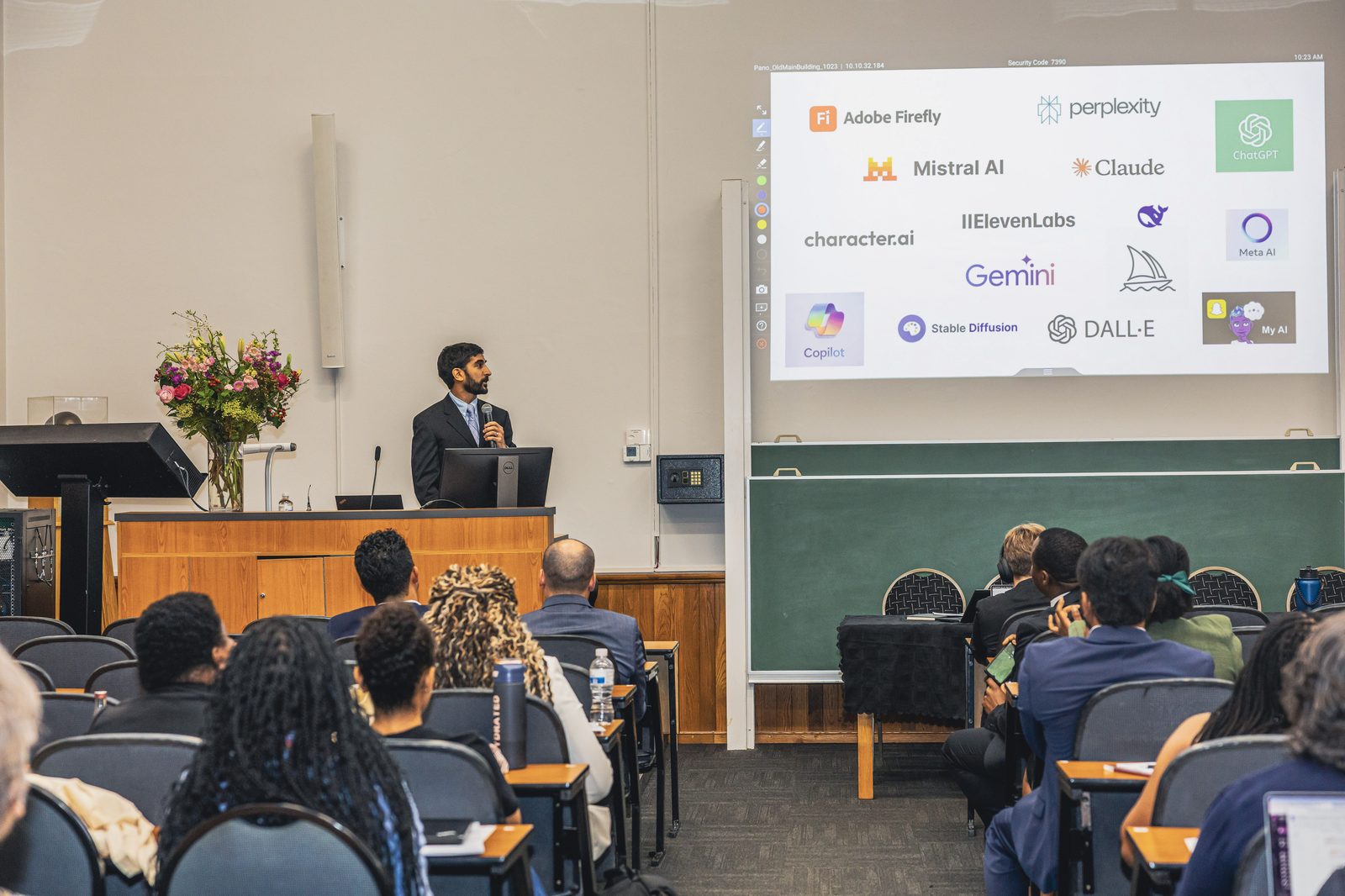
The Research Behind the Talk
Sameer Hinduja, Ph.D. is an AI safety keynote speaker for schools and conferences, a Professor of Criminology and Criminal Justice at Florida Atlantic University, and Co-Director of the Cyberbullying Research Center. He speaks at high school and middle school assemblies, faculty professional development days, parent evenings, and education conferences on generative AI, AI chatbots and companion apps, deepfake abuse, and AI literacy. His research has been cited approximately 30,000 times.
Artificial intelligence reached young people faster than the adults in their lives could prepare for it. Teenagers are forming attachments to AI companion apps, generative tools are producing nonconsensual images of classmates, and chatbots are giving minors guidance no parent would sanction. Most schools and organizations are responding without a clear picture of what is actually happening.
Dr. Sameer Hinduja studies this directly, drawing on nationally representative data from US youth. His current and recent work covers conversational AI and companion apps, the intersection of youth loneliness and mental health with AI adoption, deepfake abuse in schools, AI-facilitated harassment and hate, and the use of generative AI for catfishing, sextortion, and identity theft. The talk shares what that research is finding, in language accessible for all audiences regardless of technical background.
Platforms are a central part of the conversation, not an afterthought. Dr. Hinduja advises technology companies on youth safety, and the talk examines what platforms are doing to detect and label AI-generated content, verify users, and restrict harmful outputs.
What the Research Shows
Dr. Hinduja's studies draw on data from approximately 40,000 young people in the United States and internationally, and his research has been cited approximately 30,000 times across pediatrics, psychology, education, computer science, and nursing.
His current work examines how nationally representative samples of US youth adopt, use, and misuse conversational AI companions, including romantic chatbot apps used by teens..
He was quoted extensively in the Associated Press national investigation into deepfake cyberbullying in schools in December 2025, coverage carried by PBS NewsHour, ABC News, and Education Week.
His early 2026 research with Dr. Justin Patchin documented a significant rise in teen sexting, reported by Newsweek and U.S. News and World Report, and examined the growth of financial sextortion in which real or AI-generated intimate images are used to extort teens, particularly boys.
Companies I've Worked With























































Featured On

























Most Requested Presentation
Youth, Generative AI, and Social Chatbots: What We're Learning, and What Comes Next
Customized for either youth-serving practitioners or young people themselves, the session explains how generative AI works, how young people are actually using it, and where the genuine risks sit, separated from the moral panic. Through anonymous flash polling, the audience shares its own positive and negative experiences in real time. It closes on practical strategies, classroom and clinic activities, and the protective strengths, media literacy, critical consumption, resilience, and sound judgment, that help young people navigate these tools well rather than fear them.
Audiences leave able to:
- Identify the key benefits and risks of generative AI and social chatbots in youth contexts
- Recognize signs of AI-generated harm, including harassment, hate, deepfakes, and manipulative content
- Understand how youth mental health and loneliness intersect with AI adoption and misuse
- Tell helpful uses of conversational AI apart from harmful ones, and teach young people to do the same
- Understand the role of platforms in detecting, labeling, verifying users, and restricting harmful AI content
- Leave with classroom and clinic activities, plus resources for youth, parents, and educators
Who This Is For
Each presentation is tailored to the audience and the concerns of the specific community, and is available in person or online. Sessions are prepared separately for student assemblies, parent evenings, and faculty professional development days, and school leaders building curriculum should see AI literacy for educators. Independent, private, and faith-based schools are a significant part of this work, and have their own page.
What Hosts Say
"His keynote on Artificial Intelligence, Online Safety and Children's Rights in the Digital Environment was truly exceptional. He brought a rare combination of global expertise and genuine care for children's rights, helping our audience understand the urgent intersections between AI, online safety, and youth protection in ways that felt both scholarly and deeply human."
Dr. Bridget Joyce Machaka, Researcher, University of the Free State, South Africa
"He delivered one of the most relevant and practically grounded trainings our team has experienced. He brought the full range of digital harm to life, from harassment and deepfakes to AI-driven risks, and left us with real, evidence-based tools we could put to use immediately."
Wendy Berkey, JD, Clinic Administrator, Blank Children's STAR Center
"Sameer brought his years of research, his wisdom, humility and heart to the session, and we left as better, more informed people. His thoughtful insights into strategies and evidence were genuine and compelling."
Lesley Podesta, Chief Executive Officer, Alannah & Madeline Foundation, Australia
"His presentation was informative, engaging, and extremely well-received. Participants praised him as knowledgeable, passionate, genuine, intelligent, and practical."
Amanda B. Nickerson, Ph.D., Director, Alberti Center for Bullying Abuse Prevention, University at Buffalo
"He speaks with authority about the ins and outs of technology and social media use, but also emphasizes the interplay between kids' on- and offline lives. He does not use scare tactics."
Phyllis L. Fagell, LCPC, School Counselor, Sheridan School, Washington DC
"The material is always fresh and discusses the most recent apps and devices that our students are using. He presented in a way that students can understand and apply."
Heidi Foley, Principal, Academy of Holy Angels, Minneapolis
"With his clear, calm, and compassionate approach, Dr. Sameer Hinduja takes the fear out of social media use. His presentation is exactly what parents, caregivers, and educators need in today's digital world."
Charlene Margot, MA, Co-Founder and CEO, The Parent Venture
"Dr. Hinduja delivered smart, informative, compelling presentations that gave the audiences much to consider. Each was tailored to the particular perspective of the audience. Highly recommended."
Christopher Keavy, President, St. John Paul II School, Hyannis, MA
Common Questions
Who is a good AI speaker for a high school assembly?
Sameer Hinduja, Ph.D. is an AI and youth keynote speaker and a Professor of Criminology and Criminal Justice at Florida Atlantic University, where his current research examines artificial intelligence and young people. He presents AI assemblies to high school and middle school students, along with parent evenings and faculty professional development, at public, independent, and faith-based schools across the United States and internationally.
What does an AI assembly for high school students cover?
An AI assembly from Dr. Hinduja explains how generative AI and chatbots actually work, how students are using them, and where the genuine risks sit. It covers AI companion apps and emotional dependency, deepfake and image-based abuse among classmates, AI-facilitated harassment, AI-driven catfishing and sextortion, and the AI literacy and critical thinking that help students use these tools well rather than fear them.
Who is a leading keynote speaker on AI risks and harms to youth?
Sameer Hinduja, Ph.D. is widely recognized as a leading expert and keynote speaker on AI risks and harms to youth, AI chatbots, and youth online safety. His research has been cited approximately 30,000 times, and his commentary on AI and young people has appeared in MIT Technology Review and the Associated Press. He presents to schools, districts, conferences, clinicians, technology platforms, and government agencies worldwide.
Does the session address academic integrity and AI use in schools?
Academic integrity is a live concern for every school adopting AI, and Dr. Hinduja can address it as part of a session on how students are using these tools. His research focus is the risks and harms side, including chatbot dependency, deepfakes, harassment, and exploitation, and schools looking primarily for classroom AI integration strategy should say so when they reach out.
Is the session appropriate for parents and educators who are not technical?
Yes. The talk is written for a general audience and explains how the technology works in plain language, without assuming any technical background, and without relying on fear or scare tactics.
Can he train clinicians and mental health professionals on AI chatbot risks to youth?
Yes. Dr. Hinduja offers sessions for clinicians, therapists, school counselors, pediatricians, and mental health professionals on how adolescents are forming emotional relationships with AI companion apps, how to recognize problematic AI use in clients, and what intervention and prevention look like.
Background
per Stanford University and Elsevier
Dr. Hinduja is a Professor in the School of Criminology and Criminal Justice at Florida Atlantic University and a Faculty Associate at the Berkman Klein Center for Internet & Society at Harvard University. He co-founded the Cyberbullying Research Center, has published nine books, and is Co-Founder and Co-Editor-in-Chief of the International Journal of Bullying Prevention. He has testified before the U.S. Attorney General and federal departments and advised the White House across two administrations on youth online safety. You can read his full biography at hinduja.org.
Any questions? Reach out!
Contact Dr. Hinduja