Elementary and Lower School Assembly Speaker
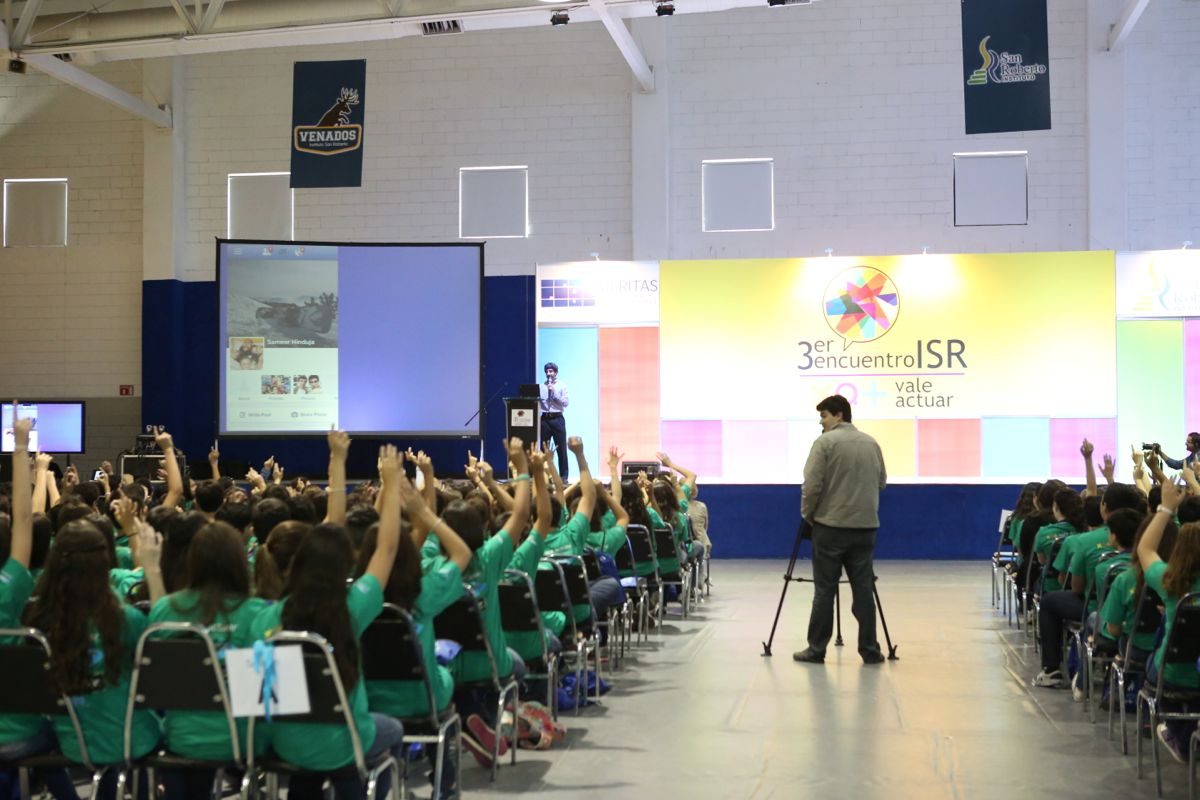
Dr. Sameer Hinduja speaks to elementary and lower school students, including audiences as young as kindergarten, in language they understand and with the energy the age group requires.
Why Start This Young
Sameer Hinduja, Ph.D. is an elementary and lower school assembly speaker, a Professor of Criminology and Criminal Justice at Florida Atlantic University, and Co-Director of the Cyberbullying Research Center. He has presented to students as young as kindergarten, and his research has been cited approximately 30,000 times.
Most schools begin this work in middle school, and by then the habits are already set. Young students are on shared tablets, group chats, and gaming platforms years before anyone talks to them about it, and the patterns they build at eight and nine are the ones they carry into thirteen and fourteen.
The upside of starting early is that the conversation can be an entirely positive one. There is no incident to process and no damage to undo. At this age the material is about kindness, about what to do when something feels wrong, and about which grown-up to tell, and young students take all of it in without the defensiveness that shows up a few years later.
Every session is built for the specific grade band in the room. A kindergarten through second grade audience and a fourth and fifth grade audience need different examples, different vocabulary, and different lengths, and they do not belong in the same assembly if the schedule can avoid it.
Companies I've Worked With























































Featured On
























Most Requested Presentation
Tech Talk, Good Times Every Time
The session opens from the premise that technology is fun, useful, and makes life better, and that using it well comes with responsibilities we can all handle. From there it moves into meanness between classmates, both in person and online, what those moments actually look like, and the better and worse ways to respond.
Students leave able to:
- Tell the difference between conflict, drama, teasing, and something that has crossed a line
- Name how it feels to be treated unkindly online, and how to handle those feelings
- Be a good friend to someone who is being picked on, even when that is hard or scary
- Identify the adults at school they can go to, and know what to say when they get there
- Practice the basics, meaning passwords, privacy, and not posting other people without asking
- Understand what AI tools are, in terms an elementary student can follow
- See what other young people have done to make their own schools better
A large portion of the session is spent on getting help. Young students frequently know exactly who to tell and do not do it, because they are worried about being a tattletale, losing a device, or making things worse. That fear is addressed directly, and it is often the part teachers say made the difference afterward.
How the Assembly Works
Sessions are tailored to the audience and the concerns of the specific community, and are available in person or online. Elementary sessions run shorter than middle and high school assemblies, because attention spans are the constraint that matters most, and they lean heavily on stories, humor, and audience participation.
Where a school allows student devices, anonymous live polling can be included for upper elementary grades. Where it does not, or where the age makes it impractical, the same participation happens by show of hands, which works just as well in a room of nine-year-olds.
Every session ends with practical strategies and resources that teachers can use the following week, along with classroom activities that Dr. Hinduja created and gives away at no cost.
Many schools schedule the lower school assembly alongside middle and upper school sessions and a parent and guardian evening, so that an entire campus hears consistent material in one visit.
What Hosts Say
“The Lower School presentation was very engaging, and there was great student participation. Students connected with the presenter and with his use of a variety of user-friendly headings and subheadings prior to talking about the topic. The entire day was an outstanding presentation, filled with high energy and a wealth of information.”
Theo Stephenson, Director of Counseling, Saint Andrew’s School
“Your presentations to our children in grades 3, 4 and 5 and then again to grades 6, 7 and 8 were equally informative but uniquely tailored to each age group. You captured their attention, ignited their interest and fostered instantaneous believability with all of them. The level of questioning from them indicates the level of trust you earned.”
Steve Hinds, Headmaster, Meadowbrook School, Weston, MA
“Thank you so much for the thoughtful and engaging conversation you lead with our students. I heard from many parents that kids went home talking about the presentation. You truly made an impact and added another dimension to our Digital Citizenship program. I appreciate the time you took with the kids to individually answer their questions and the respect you showed for their concerns.”
Tanna Horner, Head of Lower School, The Out-of-Door Academy, Sarasota, FL
“He wowed all of our audiences, parent, elementary, middle and upper school, with his knowledge, professionalism, expertise and incredible ability to captivate. It is unusual to find a speaker who can deeply connect and engage with students of all ages and Dr. Hinduja did this seamlessly.”
Susie London, Psy.D., NCSP, Middle and High School Psychologist, RASG Hebrew Academy, Miami Beach, FL
“Dr. Hinduja's ability to hone in on the issues that our students are facing, and offer practical and straight-forward solutions to responsible technology use was impactful for our student body. This work is needed in all educational spaces and I am glad we were able to give this support to our students.”
Adam Diaz, Lower and Middle School Counselor, Landon School
Common Questions
Who is a good online safety speaker for elementary students?
Elementary audiences need a different speaker skill than middle or high school audiences, so ask directly how often the person presents to students this young and ask to see video of a lower school session. Sameer Hinduja presents lower school assemblies that are age-appropriate and free of scare tactics, and a lower school session can happen on the same visit as middle and upper school assemblies.
What age can students start learning about online safety?
Earlier than most schools assume. Dr. Hinduja has presented to students as young as kindergarten, with the material built entirely around kindness, telling a trusted adult, and simple habits rather than around risk. By middle school the behaviors have generally established themselves, so the elementary years are where this work does the most good.
What does an elementary school assembly on technology cover?
It covers the responsible use of devices and games, meanness between classmates both in person and online, how it feels to be treated unkindly, how to be a good friend to someone who is being picked on, which adults to go to for help and what to say, password and privacy basics, not posting other people without asking, and an age-appropriate introduction to AI tools.
Is the session appropriate for kindergarten through second grade?
Yes, with a version built for that grade band. The examples, vocabulary, and length differ substantially from an upper elementary session, and schools that combine kindergarten through fifth grade into one assembly end up with a talk that fits the middle of the range and nobody else. Splitting by grade band is better wherever the schedule allows it.
Does the assembly frighten young students?
No. There is no graphic content and there are no scare stories. The session opens from the position that technology is fun and useful, and spends its time on kindness, decision making, and getting help. Hosts consistently describe young students as leaving engaged rather than worried.
Can the lower school assembly happen on the same visit as middle and upper school sessions?
Yes, and many schools do exactly that so an entire campus hears consistent material. Each version is built separately for its grade band. Parent and guardian evenings and faculty sessions are frequently added to the same visit.
Background
per Stanford University and Elsevier
Dr. Hinduja is a Professor in the School of Criminology and Criminal Justice at Florida Atlantic University and a Faculty Associate at the Berkman Klein Center for Internet & Society at Harvard University. He co-founded the Cyberbullying Research Center, has published eight books, and is Co-Founder and Co-Editor-in-Chief of the International Journal of Bullying Prevention. He has testified before the U.S. Attorney General and federal departments and advised the White House across two administrations on youth online safety. You can read his full biography at hinduja.org.
Any questions? Reach out!
Contact Dr. Hinduja