How to Choose an Online Safety Speaker for Your School
Most schools call about this after something has happened. That shapes what you should book, who should hear it first, and what needs to be ready before anyone stands in front of students.
Start With Whatever Prompted the Call
Schools usually book an AI session because a new technology showed up and they want to get ahead of it. Online safety is different. Most of the time a school calls because something already happened, or because counselors are starting to see the same problem in a particular grade. Begin with whatever prompted you to look for a speaker, because that determines which session fits, who should hear it first, and when it should happen.
| What Prompted It | Session | Audience | Timing Consideration |
|---|---|---|---|
| A recent sextortion case involving a student | Sextortion prevention and response, with a separate staff briefing | Staff first, then students by grade band, then families | Wait until the affected student is supported and the investigation allows it. A session held too early can identify the student to the room. |
| Intimate or AI-generated images circulating among students | Image-based abuse, deepfakes, and response | Staff, then students, then families within the same period | Move quickly on staff and families. Give the student assembly enough distance that it is not read as being about one person. |
| A phone or social media policy change | Social media, well-being, and what the research supports | Families and staff together, students separately | Before the policy takes effect, so the reasoning is understood rather than resented. |
| Rising group chat harassment or exclusion | Cyberbullying identification, prevention, and response | Students, with staff training on recognition and response | Any time, though it lands better when it is not read as a reaction to one incident. |
| Getting ahead of it before problems start | Prevention programming and digital citizenship | Students at grades five and six, plus families | Earlier than most schools assume. Waiting until high school means arriving after the behavior has already established itself. |
| Staff who are unsure what to do when a student discloses | Recognition, first response, and reporting obligations | All staff, including non-teaching staff | Before any student session, so the adults are ready for what follows it. |
| An annual or recurring commitment | A sequence across grade bands rather than a single event | Students, families, and staff on a rotating cycle | Plan the sequence a year out, not session by session. |
What to Have in Place Before the Session
This is the part schools most often skip, and it is the part that determines whether a session helps or creates a problem. Sessions on sextortion, image-based abuse, and online harassment reliably produce student disclosures, sometimes within minutes and sometimes days later. That is a sign the session worked. It is only a good outcome if the school is ready for it.
- Counseling staff know the session is happening, know what it covers, and are available during and after it
- Staff understand their reporting obligations before students are asked to come forward, not afterward
- There is an answer to the question a student will ask, which is what happens after I tell someone
- Families have been told the session is occurring and what it addresses, with an opt-out pathway if your community expects one
- If an incident prompted the booking, the affected student and family have been consulted, so the session does not become an event about them
- Someone owns the follow-up, because disclosures arriving three days later tend to land on whoever happens to be nearby
Questions Worth Asking Before You Book
- Does the speaker work from original research, and can they tell you what the data says when a parent challenges a claim?
- How recent are the platforms, apps, and behaviors in the session? Material more than a year old will not match what your students are doing
- Does the session use graphic content or fear appeals? Ask a previous host, not only the speaker
- How does the elementary, middle, and high school material differ?
- Will the speaker raise disclosure readiness with your counseling team, or is that left to you?
- Does the session address what a student should do, or only what a student should avoid?
- Does it cover working with platforms, meaning what to report and what reporting actually accomplishes?
- Can one visit cover students, families, and staff, with each version built separately?
Common Mistakes Schools Make
Holding the assembly too soon after an incident. The instinct is understandable and the timing is often wrong. A session held while a case is fresh can identify the affected student to the entire room, and it teaches everyone else that disclosure produces a school-wide event.
Booking a speaker instead of building a program. One assembly raises awareness. Schools that see change pair it with staff training, family communication, and something that returns.
Starting too late. Most schools begin this work in high school, and by then the behaviors have established themselves. Grades five and six are the more useful starting point.
Choosing a session on how frightening it is. Fear-based programming produces a spike of attention, minimal behavior change, and students who are less willing to come forward.
Leaving counselors out until the day of the event. They are the ones who absorb what follows, and they should be in the planning conversation from the start.
Companies I've Worked With






















































Featured On

























Working With Dr. Hinduja
Dr. Sameer Hinduja is a Professor of Criminology and Criminal Justice at Florida Atlantic University, and Co-Director of the Cyberbullying Research Center, which he co-founded in 2005. He has gathered data from roughly 40,000 young people, and his research has been cited approximately 30,000 times. He has published some of the most cited work on cyberbullying, adolescent sexting, sextortion, and digital self-harm.
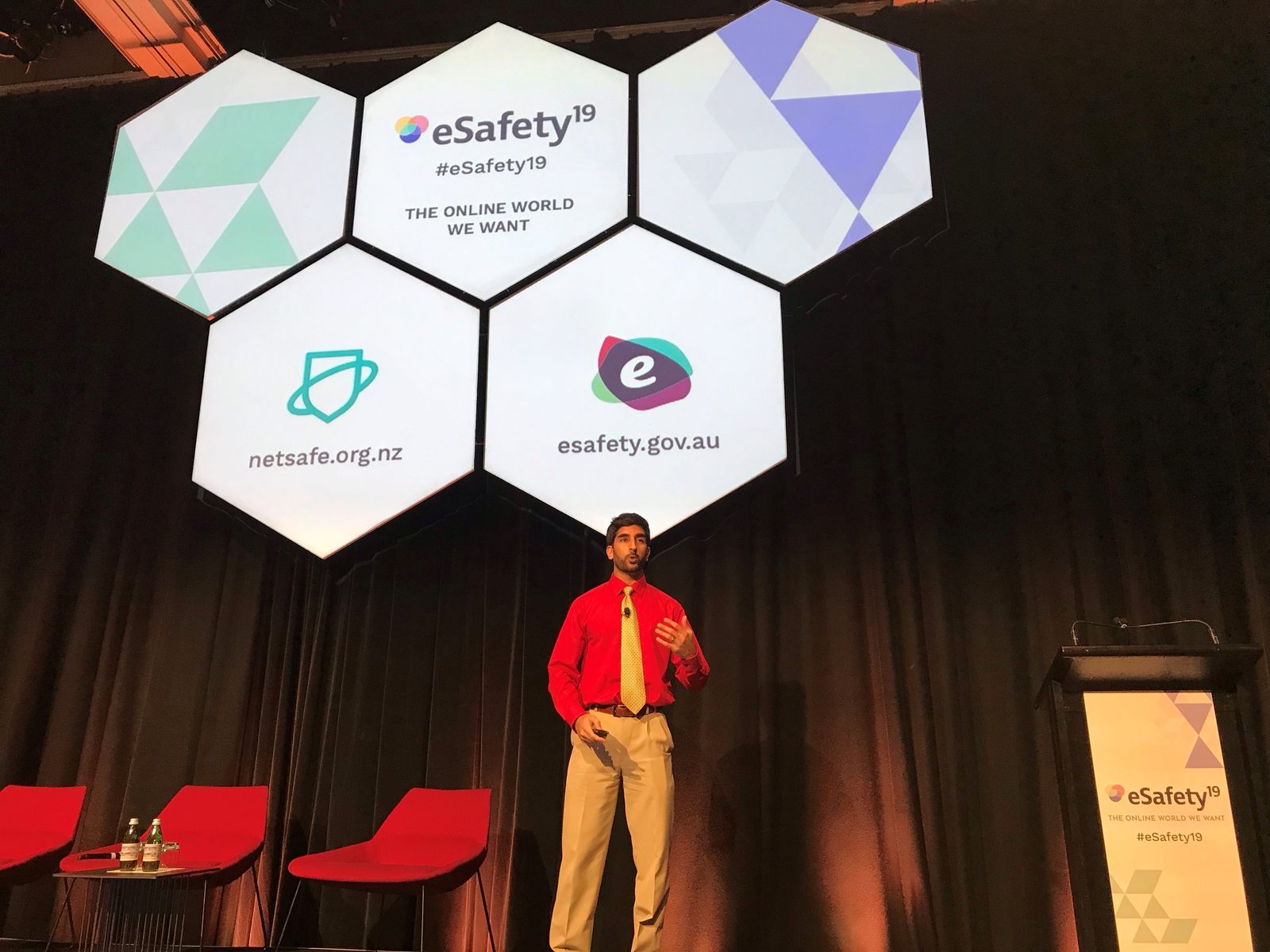
Sessions are tailored to the audience and the concerns of the specific community, and are available in person or online. He speaks on cyberbullying, sextortion, social media safety, bullying prevention, and digital well-being, and presents student assemblies, parent evenings, and faculty professional development.
What Hosts Say
“With his clear, calm, and compassionate approach, Dr. Sameer Hinduja takes the fear out of social media use. His presentation is exactly what parents, caregivers, and educators need in today's digital world.”
Charlene Margot, MA, Co-Founder and CEO, The Parent Venture
“Dr. Sameer Hinduja was the perfect keynote speaker for our International Anti-Bullying Summit. His sessions encompassed solid research, intervention, school climate improvement, and character building. He was highly knowledgeable as well as warm and accessible.”
Linda Dean, Truman Pierce Institute, College of Education, Auburn University
“Of the hundreds of professional presentations I have heard in my 37 year career, yours was clearly in the top 5%. You responded to questions very sensitively and reflected obviously extensive knowledge of the subject.”
C. Drew Edwards, Ph.D., ABPP, Clinical Child Psychologist and Adjunct Associate Professor, Wake Forest University
Common Questions
How do you choose an online safety speaker for a school?
Start with whatever prompted you to look, rather than with a topic list. A recent incident, a policy change, and a preventive program call for different sessions, different audiences, and different timing. Then ask whether the speaker conducts original research, how recent the platforms and behaviors in the session are, whether fear appeals are used, and whether the speaker will raise disclosure readiness with your counseling team.
Is it too soon to hold an assembly right after an incident?
Often, yes. A session held while a case is fresh can identify the affected student to the entire room, and it teaches everyone else that disclosing produces a school-wide event. Staff briefings and family communication can move quickly. The student assembly usually benefits from enough distance that it is not read as being about one person.
What grade should online safety education start?
Earlier than most schools assume. Grades five and six are a more useful starting point than high school, because by high school the behaviors have generally established themselves. The material at that age concentrates on early recognition, friendship dynamics, and telling a trusted adult rather than on consequences.
What should be in place before a session on sextortion or image-based abuse?
Counseling staff should know the session is happening and be available during and after it. Staff should understand their reporting obligations beforehand. There should be a clear answer to what happens after a student tells someone. Families should know the session is occurring. And someone should own the follow-up, because disclosures often arrive days later.
Should students, parents, and staff hear the same session?
No. The concerns, vocabulary, and appropriate depth differ substantially, and audiences recognize a recycled session immediately. Many schools book all three in one visit so the community works from consistent information, but each version should be built separately for its audience.
What is the difference between a one-time assembly and a program?
A single assembly raises awareness and rarely changes a culture on its own. Schools that see durable change pair the student session with staff training, family communication, and something that recurs across grade bands. If you are making an annual commitment, plan the sequence a year out rather than session by session.
Background
per Stanford University and Elsevier
Dr. Hinduja is a Professor in the School of Criminology and Criminal Justice at Florida Atlantic University and a Faculty Associate at the Berkman Klein Center for Internet & Society at Harvard University. He co-founded the Cyberbullying Research Center, has published eight books, and is Co-Founder and Co-Editor-in-Chief of the International Journal of Bullying Prevention. He has testified before the U.S. Attorney General and federal departments and advised the White House across two administrations on youth online safety. You can read his full biography at hinduja.org.
Any questions? Reach out!
Contact Dr. Hinduja