Digital Well-Being Speaker for Schools and Families
Dr. Sameer Hinduja helps a variety of organizations support youth mental health and well-being in a connected world, with an evidence-based, strengths-first, actionable approach.
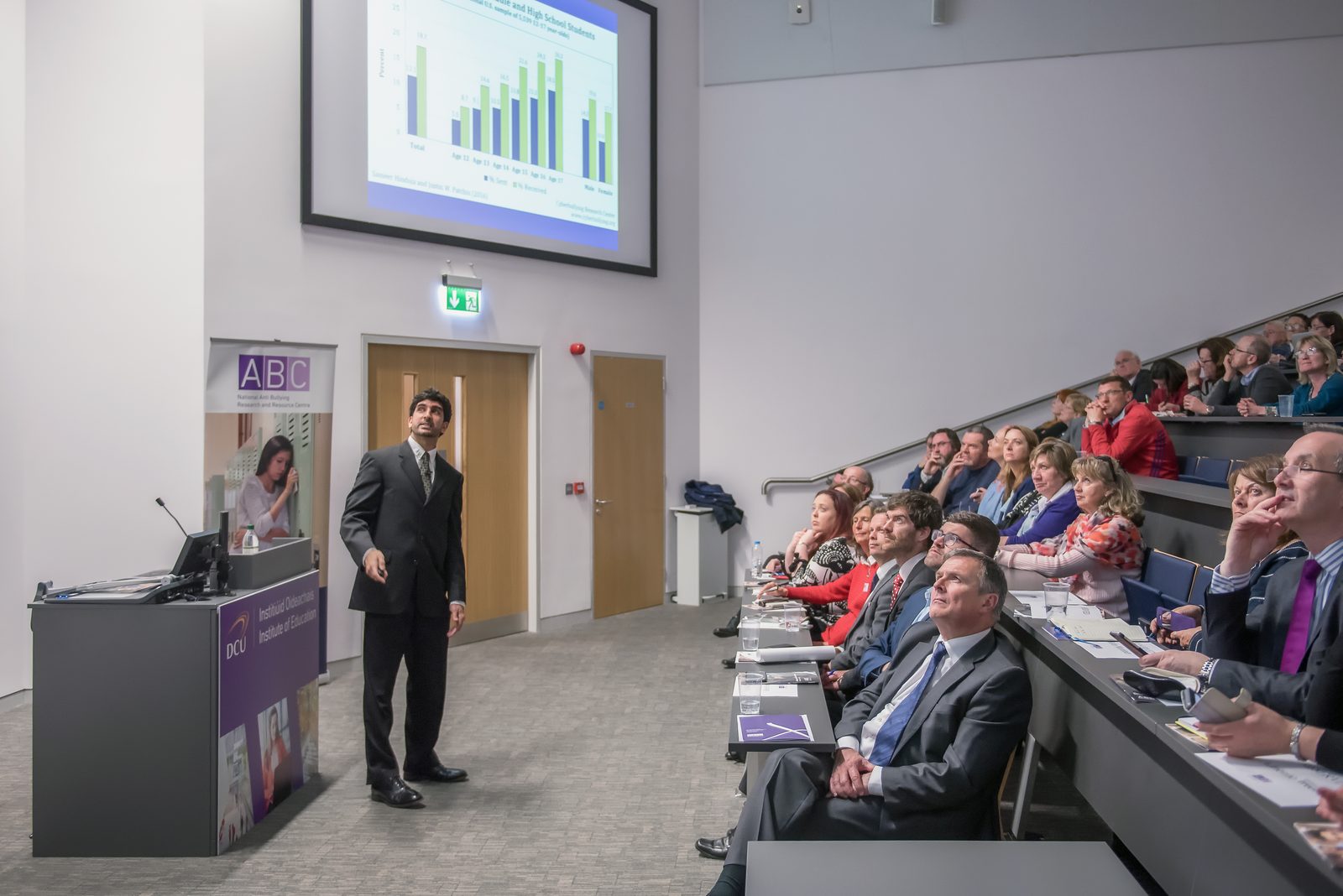
The Research Behind the Talk
Sameer Hinduja, Ph.D. is a digital well-being keynote speaker, a Professor of Criminology and Criminal Justice at Florida Atlantic University, and Co-Director of the Cyberbullying Research Center. He speaks at K-12 student assemblies, faculty professional development days, parent evenings, and national conferences on screen time, digital well-being, and adolescent mental health. His research has been cited approximately 30,000 times.
Screen time, mental health, and technology are at the center of nearly every conversation about young people right now, and most of that conversation is driven by worry rather than evidence. Educators and parents are left wanting something more useful than another warning.
Dr. Sameer Hinduja studies the factors that help young people flourish, not just the ones that harm them. His research examines hope, resilience, empathy, self-control, positive parenting, and healthy school climate as protective assets, alongside the genuine risks. The talk gives an audience a balanced, research-based understanding of digital well-being and concrete ways to build the strengths that protect young people across any platform.
What the Research Shows
He and Dr. Justin Patchin were among the first researchers to identify digital self-harm, the practice of anonymously posting cruel content about oneself online. Their landmark 2017 study in the Journal of Adolescent Health documented its prevalence, and their studies show that approximately 1 in 10 teens have engaged in it.
Their 2022 study in Child and Adolescent Mental Health found a strong association between digital self-harm and suicidal ideation, making the behavior a warning sign that counselors, clinicians, and parents need to recognize.
His 2025 study in Frontiers in Sociology examined the role of hope in cyberbullying prevention among US youth, part of a body of work on hope, resilience, empathy, self-control, and school climate as protective assets.
Dr. Hinduja's studies draw on data from approximately 40,000 young people in the United States and internationally, and his research has been cited approximately 30,000 times across pediatrics, psychology, education, computer science, and nursing.
Companies I've Worked With























































Featured On

























Most Requested Presentation
Digital Well-Being: Building the Strengths That Protect Young People
The session reframes the screen-time debate around well-being rather than fear. It covers what the research says about technology and youth mental health, and focuses on the protective strengths, hope, resilience, empathy, and sound judgment, that help young people make good decisions online and recover when things go wrong.
Audiences leave able to:
- Understand what the evidence does and does not say about screen time and mental health
- Move the conversation from restriction toward well-being and strengths
- Cultivate hope, resilience, and empathy as protective factors in young people
- Support healthy technology habits at home and at school
- Connect digital well-being to social-emotional learning and belonging
- Recognize when a young person needs more support, and how to respond
Who This Is For
Each presentation is tailored to the audience and the concerns of the specific community, and is available in person or online. Independent, private, and faith-based schools are a significant part of this work, and have their own page covering assemblies, parent evenings, and faculty in-service.
What Hosts Say
"Through his presentations, Sameer brings approachable strategies on how to effect positive change and build students' sense of belonging. His message is research-based, relevant, and timely as districts seek to enhance social-emotional learning."
Dr. Peggy Aune, Associate Superintendent of Curriculum and Instruction, Collier County School District
"He made a connection between social and emotional factors and the steps educators can take to improve school climate and encourage positive relationships. His message clearly aligned to our social-emotional learning priorities."
Karen Stelmacki, Executive Director, Exceptional Education and Student Support, Collier County Public Schools
"Learning resilience skills is paramount to success in academics, and the information provided in Dr. Hinduja's training was top-notch, presented in an informative and entertaining way."
Terri Anderson, Coordinator, Health Services and Wellness, Leon County Schools
"His presentations provided detailed research and practical, parent-to-parent tips on making our kids more resilient and empathetic, and on managing the complex world they dwell in."
Scott MacLeod, The Sophie Fund, Ithaca, NY
"As he speaks, students listen and take note. Adults, too, hear that their influence matters to kids, guiding them to use technology in powerful, kind ways. We were fortunate to have him."
Lynn Hobratschk, Assistant Superintendent of Curriculum and Instruction, Friendswood ISD
"His keynote and breakout session got excellent reviews from teachers, counselors, psychologists, and parents. The presentation was thought-provoking as well as practical."
Maribel Gonzalez, Education Summit Organizer, Puerto Rico
Common Questions
Who can give a keynote on screen time for youth?
Sessions on this subject vary widely, because much of the popular commentary about screens and youth mental health runs well ahead of the evidence. Ask any prospective speaker what the research actually supports and what remains contested, and be cautious with anyone who presents the question as settled. Sameer Hinduja addresses screen time inside a broader digital well-being session, covering what the evidence does and does not show and focusing on the strengths that help students make good decisions and recover when things go wrong.
Who is a good digital well-being speaker for schools?
Sameer Hinduja, Ph.D. is a digital well-being speaker and a Professor of Criminology and Criminal Justice at Florida Atlantic University whose research covers adolescent technology use, mental health, resilience, and hope. He presents to K-12 schools, independent schools, districts, parent groups, and national conferences, and his approach is practical rather than alarmist.
What does a digital well-being keynote cover?
A digital well-being keynote from Dr. Hinduja covers attention, sleep, comparison, loneliness, and the habits that support a student's mental health in a connected life. It gives parents and faculty something more useful than a screen time limit, and it gives students a reason to care rather than a rule to resent.
How is this different from a screen time scare talk?
Dr. Hinduja does not tell young people that technology is the enemy, because they will stop listening and because the research does not support it. The session focuses on the protective strengths, including resilience, empathy, hope, and sound judgment, that let students use technology well.
Does the session connect to social and emotional learning?
Yes. The protective strengths at the center of the talk map directly onto social and emotional learning priorities, which is why districts often schedule it alongside their existing SEL and school climate work.
Does the session address AI chatbots and adolescent loneliness?
Yes. Adolescents are forming emotional attachments to AI companion apps, and the intersection of loneliness, mental health, and AI adoption is a current focus of Dr. Hinduja's research.
Background
per Stanford University and Elsevier
Dr. Hinduja is a Professor in the School of Criminology and Criminal Justice at Florida Atlantic University and a Faculty Associate at the Berkman Klein Center for Internet & Society at Harvard University. He co-founded the Cyberbullying Research Center, has published nine books, and is Co-Founder and Co-Editor-in-Chief of the International Journal of Bullying Prevention. He has testified before the U.S. Attorney General and federal departments and advised the White House across two administrations on youth online safety. You can read his full biography at hinduja.org.
Any questions? Reach out!
Contact Dr. Hinduja