Speaker and Trainer for Mental Health and Healthcare Professionals
Dr. Sameer Hinduja works with pediatricians, nurses, therapists, and school counselors on what shows up in the exam room and the counseling office once adolescent life runs through a screen.
The Research Behind the Training
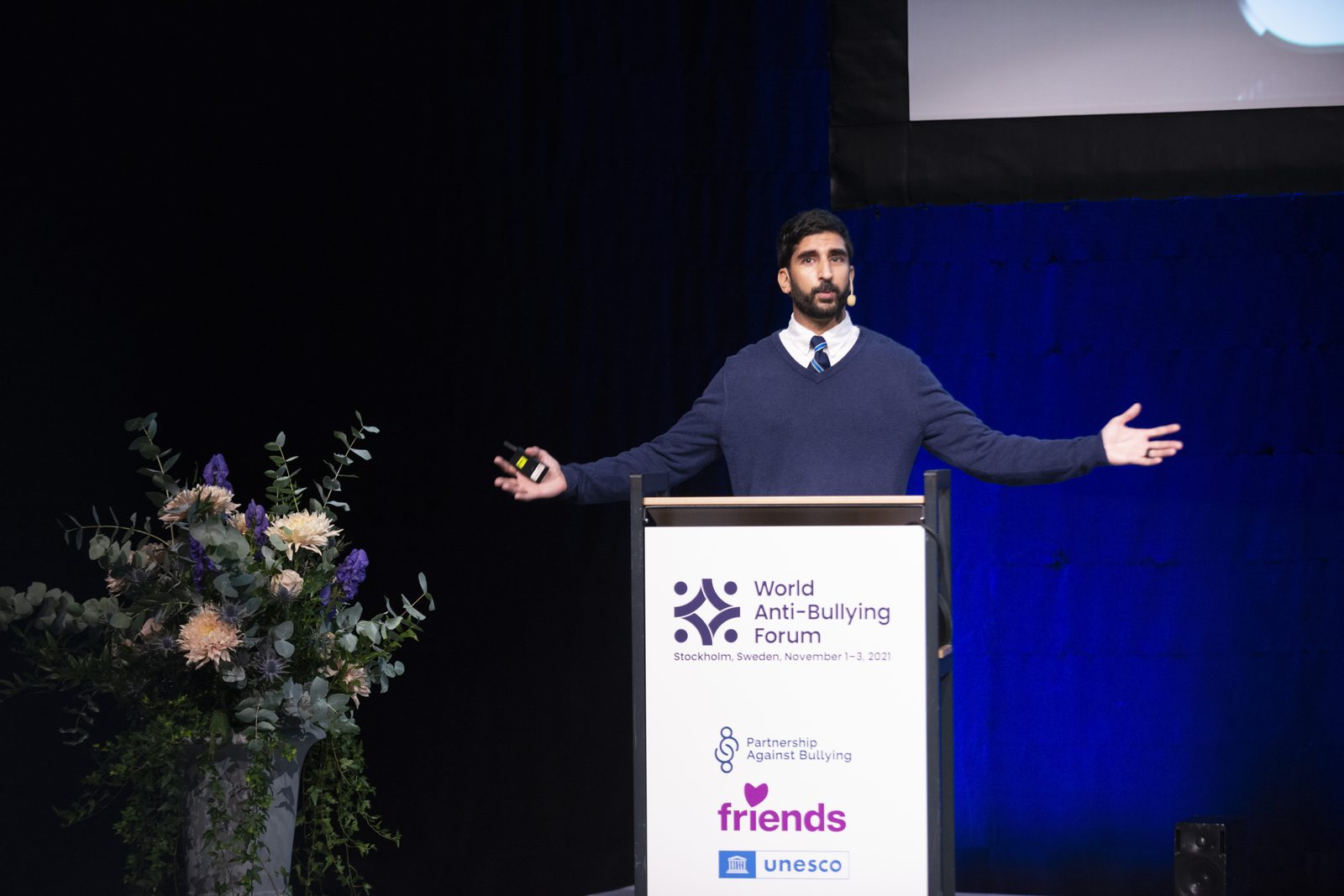
Sameer Hinduja, Ph.D. is a speaker and trainer for health and mental health professionals, a Professor of Criminology and Criminal Justice at Florida Atlantic University, and Co-Director of the Cyberbullying Research Center. He presents at grand rounds, clinical conferences, hospital and clinic in-service trainings, and counselor associations. His research has been cited approximately 30,000 times.
Clinicians occupy a difficult position with this material. They are frequently the first adult a young person tells, and they are asked to assess something that changes faster than any clinical training cycle can follow. A tool that did not exist eighteen months ago is now part of a patient’s daily emotional life, and the intake form has no line for it.
The training is built to close that gap. It covers what the current research actually establishes about adolescent technology use, which is considerably narrower than either the alarmist or the dismissive accounts suggest, and it translates that into language a clinician can use in a session.
Dr. Hinduja gathers data directly from young people, roughly 40,000 to date, and also advises technology companies on youth safety. That second vantage point matters clinically, because it informs what a clinician can realistically tell a family about reporting, removal, and what a platform will and will not do.
What Clinicians Ask About Most
Sessions are assembled around what a particular group is seeing. These come up nearly everywhere.
- How to screen for problematic technology use without turning the visit into an interrogation
- What emotional reliance on an AI companion app looks like in an adolescent client, and how to work with it rather than against it
- Digital self-harm, meaning anonymous online self-cruelty, which Dr. Hinduja was among the first researchers to document and which most clinicians have never been trained to recognize
- How to respond when a young patient or client discloses sextortion, and why the first response shapes everything after it
- What image-based abuse, including AI-generated imagery, does to an adolescent, and what recovery looks like
- Which associations between screen use and adolescent mental health are actually supported, and which are not
- What to tell a parent who arrives convinced that removing the phone will fix it
- Referral pathways, reporting obligations, and what platforms and law enforcement can realistically do
Companies I've Worked With























































Featured On

























Most Requested Presentation
Adolescents, AI, and Online Harm, What Clinicians Are Seeing and What the Research Supports
The session moves from what the evidence establishes, to what it does not, to what a clinician can do in a fifteen-minute visit or a fifty-minute session. It uses case examples rather than statistics alone, and it treats the clinician as someone who has to act on incomplete information rather than as an audience for research summary.
Attendees leave able to:
- Ask screening questions that a young person will answer honestly
- Recognize AI companion reliance, and distinguish it from ordinary use
- Identify digital self-harm and understand what it tends to signal
- Respond to a disclosure of sextortion or image-based abuse without deepening the shame that keeps young people silent
- Separate the research that supports clinical concern from the coverage that does not
- Counsel families on realistic responses rather than confiscation
- Know the reporting and referral pathways, and what each one actually accomplishes
- Leave with practical strategies and resources they can bring into the next appointment
Who This Is For
Sessions are tailored to the audience and the concerns of the specific group, and are available in person or online. This work suits pediatric and adolescent medicine grand rounds, hospital and clinic in-service training, psychology and psychiatry conferences, counseling and social work associations, school counselor and school nurse groups, and integrated behavioral health teams.
Continuing education credit is arranged by the host institution rather than by Dr. Hinduja, and sessions can be structured to meet accreditation requirements when a host raises that early. To plan a session, reach out.
What Hosts Say
“Dr. Hinduja came to speak to our clinicians, mental health professionals, and other professional MDT partners, and he delivered one of the most relevant and practically grounded trainings our team has experienced. He brought the full landscape of digital harm to life - from harassment and deepfakes to AI-driven risks - and left us with real, evidence-based tools we could put to use immediately.”
Wendy Berkey, JD, Clinic Administrator, Blank Children's STAR Center
“Of the hundreds of professional presentations I have heard in my 37 year career, yours was clearly in the top 5%. You responded to questions very sensitively and reflected obviously extensive knowledge of the subject.”
C. Drew Edwards, Ph.D., ABPP, Clinical Child Psychologist and Adjunct Associate Professor, Wake Forest University
“He speaks with authority about the ins and outs of technology and social media use, but also emphasizes the interplay between kids' on- and offline lives. He does not use scare tactics.”
Phyllis L. Fagell, LCPC, School Counselor, Sheridan School, Washington DC
“Sameer brought his years of research, his wisdom, humility and heart to the session, and we left as better, more informed people. His thoughtful insights into strategies and evidence were genuine and compelling.”
Lesley Podesta, Chief Executive Officer, Alannah & Madeline Foundation, Australia
Common Questions
Who is a good speaker on youth technology use for clinicians and health care professionals?
Dr. Sameer Hinduja presents grand rounds and clinical trainings on adolescent technology use, AI chatbots and companion apps, digital self-harm, cyberbullying, sextortion, and image-based abuse. He is a Professor of Criminology and Criminal Justice at Florida Atlantic University and Co-Director of the Cyberbullying Research Center, and his research has been cited approximately 30,000 times.
What should clinicians know about AI chatbot reliance in adolescent clients?
Companion apps are designed to sustain engagement, which makes them unusually good at meeting a lonely adolescent where they are and unusually poor at encouraging that adolescent to seek human connection. Clinically, what matters is distinguishing ordinary use from reliance, understanding what the young person is getting from the relationship, and working with that need rather than simply removing the tool.
How do you screen for problematic technology use in an adolescent patient?
The training covers screening language that a young person will answer honestly, which generally means asking about function and feeling rather than about hours. Questions about what a young person turns to when upset, who they talk to at two in the morning, and what would be hard to give up tend to produce more clinically useful answers than time-based questions.
What is digital self-harm, and how would a clinician recognize it?
Digital self-harm is the anonymous online posting of cruel content about oneself. Dr. Hinduja was among the first researchers to document it, and it remains largely absent from clinical training. It matters because it is associated with meaningful distress and because it is easily mistaken for external victimization, which sends the clinical response in the wrong direction.
What should a therapist do when a client discloses sextortion?
The training covers the first session after a disclosure, including how to respond in a way that reduces rather than compounds shame, what the client needs to hear about fault, what reporting and image removal pathways exist, how mandatory reporting obligations apply, and how to work with a family that may respond with anger or blame.
Is the training appropriate for school counselors as well as licensed clinicians?
Yes. School counselors and school nurses are often the first adult a student tells, and sessions can be weighted toward the school setting, including how counseling staff coordinate with administrators and what to have in place before a school-wide session on these topics.
Background
per Stanford University and Elsevier
Dr. Hinduja is a Professor in the School of Criminology and Criminal Justice at Florida Atlantic University and a Faculty Associate at the Berkman Klein Center for Internet & Society at Harvard University. He co-founded the Cyberbullying Research Center, has published eight books, and is Co-Founder and Co-Editor-in-Chief of the International Journal of Bullying Prevention. He has testified before the U.S. Attorney General and federal departments and advised the White House across two administrations on youth online safety. You can read his full biography at hinduja.org.
Any questions? Reach out!
Contact Dr. Hinduja