AI Literacy Speaker for Educators and School Leaders
Dr. Sameer Hinduja works with instructional leaders and curriculum teams on what students actually need to understand about artificial intelligence, and how to teach it in a classroom.
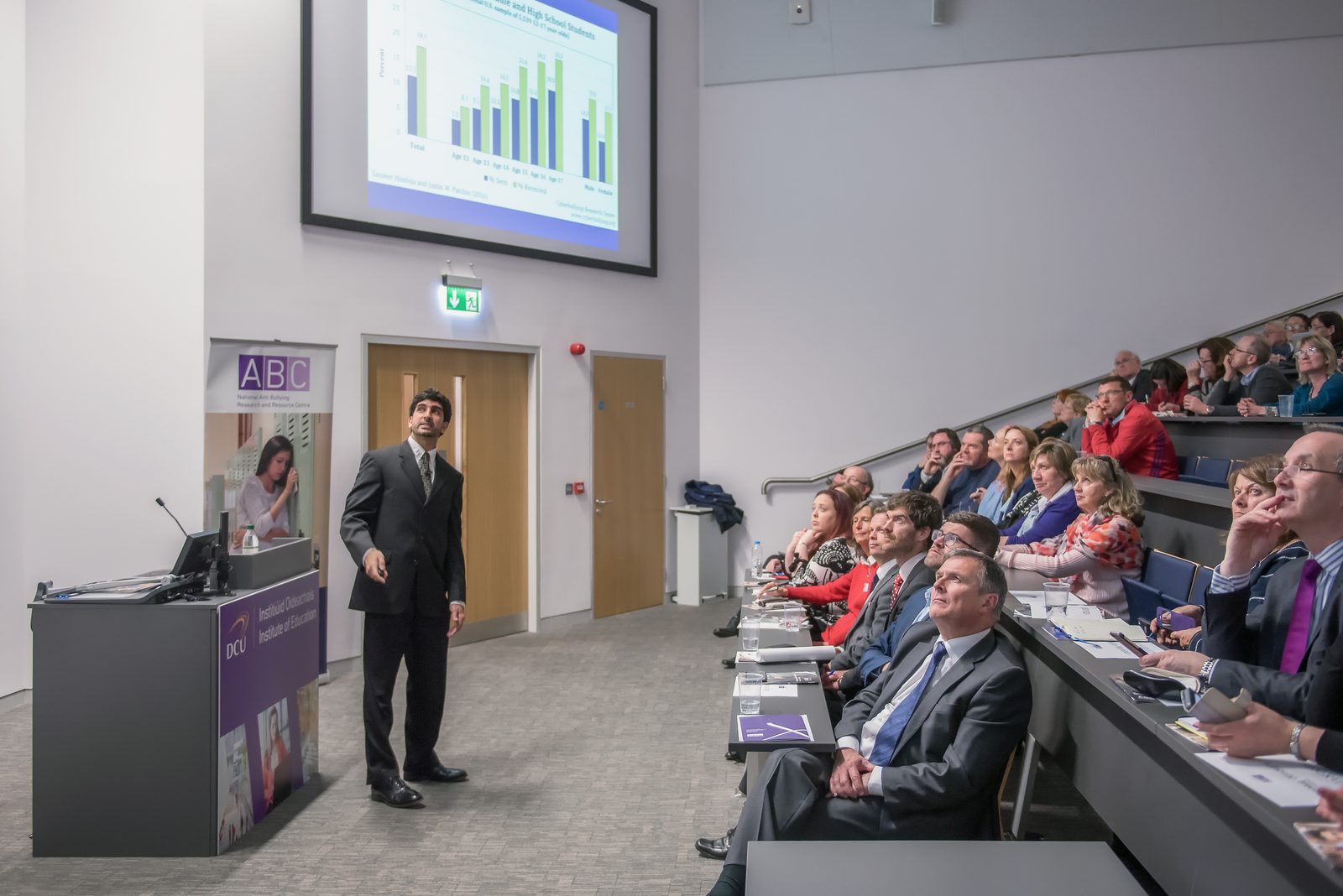
The Research Behind the Session
Sameer Hinduja, Ph.D. is an AI literacy speaker for educators, a Professor of Criminology and Criminal Justice at Florida Atlantic University, and Co-Director of the Cyberbullying Research Center. He presents at educator leadership summits, curriculum planning sessions, and education conferences on AI literacy and digital citizenship. His research has been cited approximately 30,000 times.
AI literacy has become a term schools use confidently without agreeing on what it means. For some it means teaching students to write prompts. For others it means a warning about cheating. Neither is literacy, and a school that adopts either version will find it has not changed how students think about these systems at all.
Dr. Hinduja approaches literacy as a set of capacities a student can demonstrate. A literate student can explain, in plain terms, what a language model is doing when it produces an answer. That student knows why fluency and accuracy are unrelated in these systems, can identify what a model does not know, understands who built it and what the builder wanted, and recognizes when a system is engineered to hold attention rather than to help.
That framing matters for a practical reason. Every safety concern schools have, meaning chatbot dependency, misinformation, deepfakes, and academic dishonesty, gets easier to address with students who understand the machinery. Literacy is the upstream work, and a school that does it well spends less time downstream.
How This Differs From an AI Safety Session
Schools frequently ask for one when they want the other, so the distinction is worth stating plainly.
An AI safety session addresses what can go wrong, meaning companion app reliance, deepfake abuse, AI-assisted harassment, catfishing, and exploitation. It is grounded in Dr. Hinduja’s research on harm, and its audience is usually a whole community that needs to understand a threat.
An AI literacy session addresses what students should be able to do, meaning evaluate outputs, understand incentives behind the systems, use these tools with judgment, and know what is worth handing to a machine. Its audience is usually the people who decide what gets taught.
Most schools eventually need both, and a single visit can include both. But a leadership team building a scope and sequence needs the literacy conversation first, because the safety material lands differently in a school where students already understand what these systems are.
Companies I've Worked With

















































Featured On

























Most Requested Presentation
AI Literacy for Schools, What Students Need to Understand and How to Teach It
The session gives a leadership team a working definition of AI literacy, the capacities that sit underneath it, where those capacities fit across grade bands, and classroom activities that teach them. It connects the work to existing digital citizenship and media literacy programs rather than proposing a separate initiative, since most schools do not have room for another one.
Educators leave able to:
- Define AI literacy in terms of what a student can demonstrate, not what a student has been shown
- Explain how these systems work at a level appropriate for their own students
- Teach evaluation, meaning how to check a confident answer and recognize what a model cannot know
- Address the engagement incentives built into consumer AI products, including companion apps
- Connect AI literacy to existing digital citizenship and media literacy instruction
- Sequence the material across grade bands rather than delivering it once and moving on
- Take classroom activities back to teachers who need something they can use immediately, developed by Dr. Hinduja and free to use
Who This Is For
Sessions are tailored to the audience and the concerns of the specific community, and are available in person or online. This work suits educator leadership summits, curriculum and instruction teams, digital citizenship coordinators, technology directors, education conferences, and schools building a scope and sequence rather than booking a one-time event.
Schools that want the same material delivered to classroom teachers as practical training should look at faculty professional development. Schools that want students addressed directly should look at student assemblies.
What Hosts Say
“His keynote on Artificial Intelligence, Online Safety and Children's Rights in the Digital Environment was truly exceptional. He brought a rare combination of global expertise and genuine care for children's rights, helping our audience understand the urgent intersections between AI, online safety, and youth protection in ways that felt both scholarly and deeply human.”
Dr. Bridget Joyce Machaka, Researcher, University of the Free State, South Africa
“Sameer brought his years of research, his wisdom, humility and heart to the session, and we left as better, more informed people. His thoughtful insights into strategies and evidence were genuine and compelling.”
Lesley Podesta, Chief Executive Officer, Alannah & Madeline Foundation, Australia
“His presentation was informative, engaging, and extremely well-received. Participants praised him as knowledgeable, passionate, genuine, intelligent, and practical.”
Amanda B. Nickerson, Ph.D., Director, Alberti Center for Bullying Abuse Prevention, University at Buffalo
“He combines detailed research and captivating videos with practical applications for schools. After hearing him speak, I return armed with wonderful resources and an action plan for our district.”
Carol Bartolac, District Coordinating Teacher for Technology, Blue Valley School District, Overland Park, KS
Common Questions
Who is a good AI literacy speaker for educators?
Look for someone who studies how students actually use these tools and who can give teachers something to take back to a classroom the same week. Sameer Hinduja presents on AI literacy to educator leadership summits, curriculum teams, digital citizenship coordinators, and technology directors, drawing on his own national research with US youth. His sessions include classroom activities that are free for schools to use.
What is AI literacy for students?
AI literacy is what a student can demonstrate, not what a student has been shown. A literate student can explain in plain terms what a language model is doing when it produces an answer, understands why fluency and accuracy are unrelated in these systems, can identify what a model does not know, understands who built the system and what the builder wanted from it, and recognizes when a product is engineered to hold attention rather than to help.
What is the difference between AI literacy and AI safety?
An AI safety session addresses what can go wrong, including companion app reliance, deepfake abuse, AI-assisted harassment, and exploitation, and it is usually delivered to a whole community that needs to understand a threat. An AI literacy session addresses what students should be able to do with these tools and is usually delivered to the people who decide what gets taught. Most schools eventually need both, and a single visit can include both.
What should an AI literacy curriculum cover?
It should cover how these systems generate output, why confident answers can be wrong, how to evaluate and verify what a model produces, who builds these products and what incentives shape them, where AI is genuinely useful and where handing work to a machine costs a student something, and how all of this connects to existing digital citizenship and media literacy instruction. The capacities should be sequenced across grade bands rather than delivered once.
Does the session include classroom activities?
Yes. Dr. Hinduja has created a number of classroom activities himself and gives them to educators at no cost, so schools leave with material they can put in front of students rather than with a reading list. The activities connect to existing digital citizenship and media literacy programs rather than proposing a separate initiative, since most schools do not have room for another one.
Does the session address academic integrity?
It addresses academic integrity as a literacy question rather than a detection question, meaning what students should understand about handing work to a machine, what they lose when they do, and what genuine use looks like. Sessions focused on policy, detection tools, and staff response to suspected AI use are covered in faculty professional development.
Background
per Stanford University and Elsevier
Dr. Hinduja is a Professor in the School of Criminology and Criminal Justice at Florida Atlantic University and a Faculty Associate at the Berkman Klein Center for Internet & Society at Harvard University. He co-founded the Cyberbullying Research Center, has published eight books, and is Co-Founder and Co-Editor-in-Chief of the International Journal of Bullying Prevention. He has testified before the U.S. Attorney General and federal departments and advised the White House across two administrations on youth online safety. You can read his full biography at hinduja.org.
Any questions? Reach out!
Contact Dr. Hinduja